I am currently a Postdoctoral Researcher in Prof. Dawn Song’s group at UC Berkeley. Before that, I earned my Ph.D. in Computer Sciences from the University of Wisconsin–Madison, advised by Prof. Sharon (Yixuan) Li.

My current research focuses on modern LLM agents’ training and evaluation philosophy:

  • Training. When can agents acquire genuinely new skills rather than sharpen what they already know?
  • Evaluation. How should we measure agents on out-of-distribution, long-horizon, and real-world tasks?
Portrait of Yiyou Sun
Berkeley, California

Selected First-authored Researches

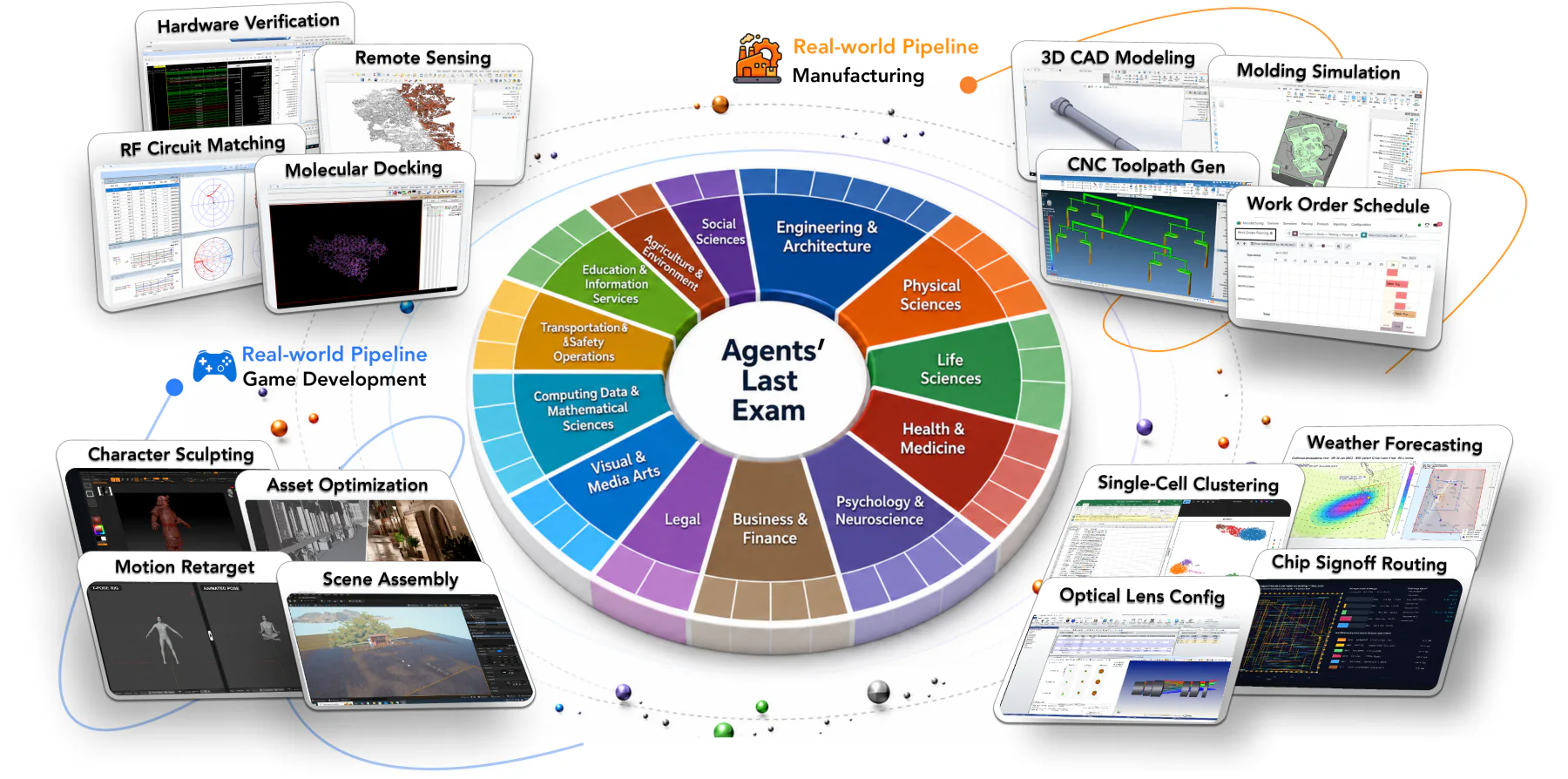
Agents’ Last Exam teaser showing its research domains and example professional workflows

2026 · Agent Evaluation

Agents’ Last Exam

Can AI agents complete the kind of long-horizon work that creates real economic value?

A living benchmark for professional workflows with verifiable outcomes. It spans 55 sub-industries and more than 1,500 tasks contributed by over 300 domain experts, evaluating whether an agent can deliver the work rather than merely answer a question about it.

Highlights: OpenAI’s GPT‑5.6 release; 50+ media coverage; 100K+ downloads in one month.
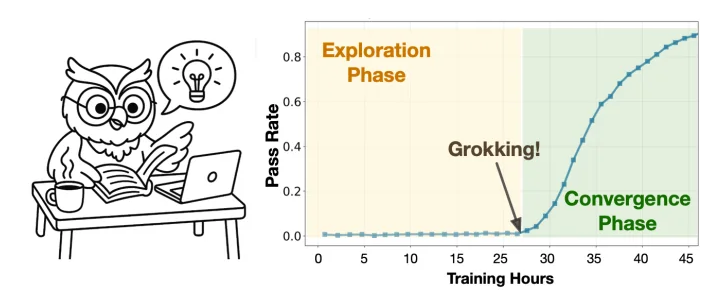
A learning curve showing a sudden grokking phase transition after a long exploration plateau

ICLR 2026 · Reinforcement Learning

RL Grokking Recipe

How can reinforcement learning unlock algorithms that a base model cannot solve at all?

DELTA isolates fully out-of-distribution coding families and reveals a striking phase transition: after a long near-zero-reward plateau, a staged reward recipe can push models from pass@K=0 to reliable solutions.

Highlights: ICLR 2026; featured by Berkeley RDI; covered by AI Era (新智元).

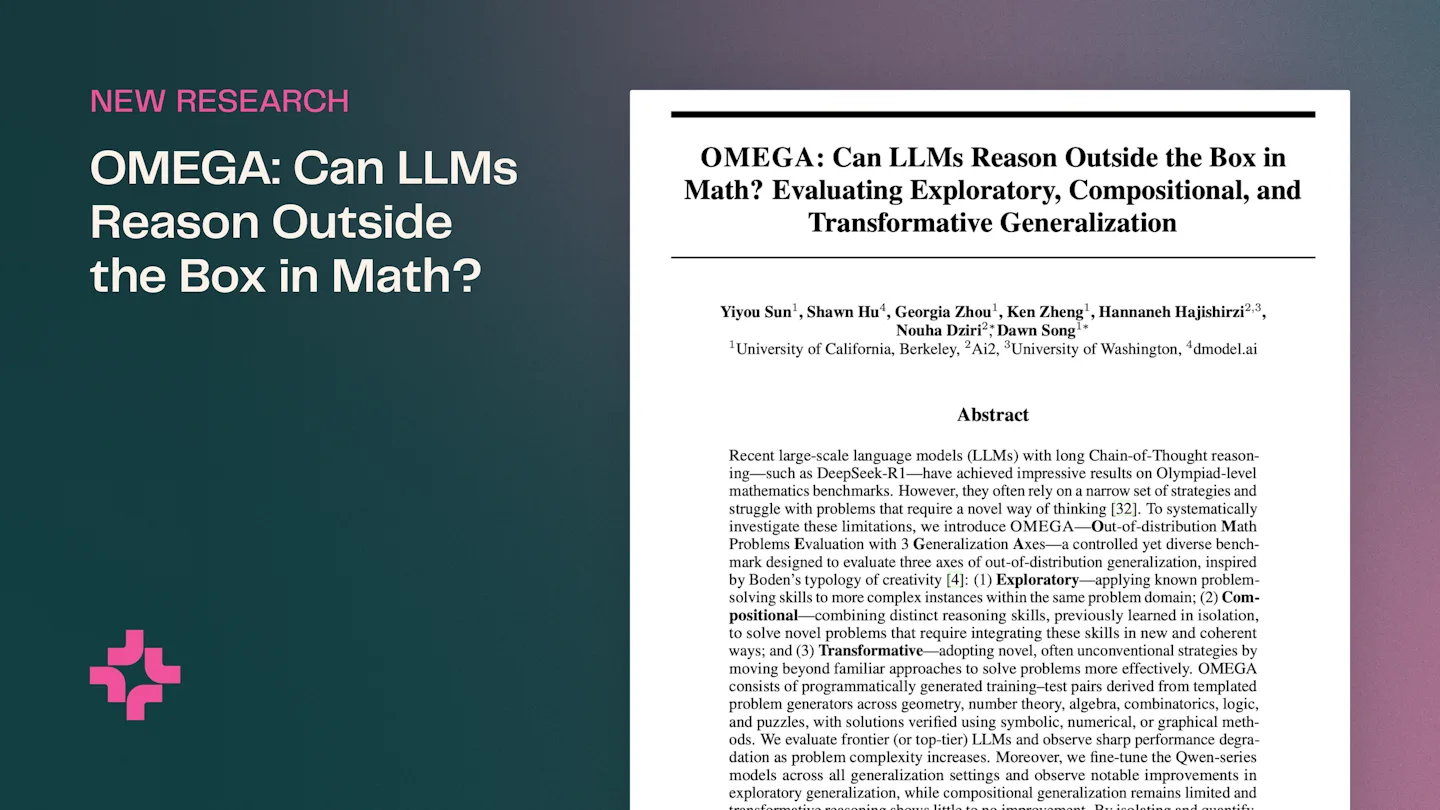
OMEGA research graphic asking whether LLMs can reason outside the box in mathematics

NeurIPS 2025 · Mathematical Reasoning

OMEGA

Can LLMs reason outside the box in mathematics?

A controlled benchmark that separates three kinds of generalization—exploratory, compositional, and transformative. Frontier models improve on harder familiar problems, but genuine strategy shifts remain elusive.

Highlights: NeurIPS 2025; featured by Ai2; covered by AI Era (新智元).

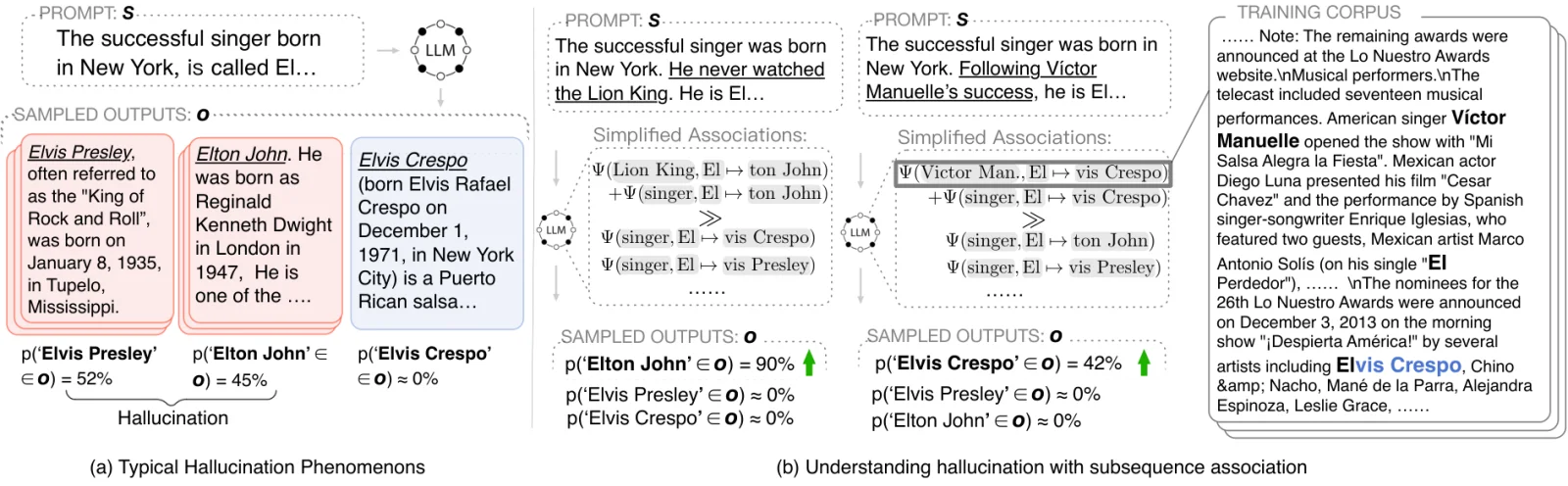
Diagram tracing hallucinated model outputs to competing subsequence associations

NeurIPS 2025 · Mechanistic Understanding

Why and How LLMs Hallucinate

A unified view of hallucination through subsequence associations.

The framework explains hallucination as a competition between faithful and misleading associations encoded by a transformer. A tracing algorithm identifies causal subsequences across randomized contexts and connects them to evidence in the training corpus.

Highlights: NeurIPS 2025; theoretical framework and causal tracing; open-source code.